Capabilities · What ExistX knows

Four disciplines. One integrated mission-system outcome.

Four connected engineering disciplines: the things ExistX knows. How that knowledge is applied lives under How We Work; what it produces lives under What We Deliver. A discipline is neither a process nor a product.

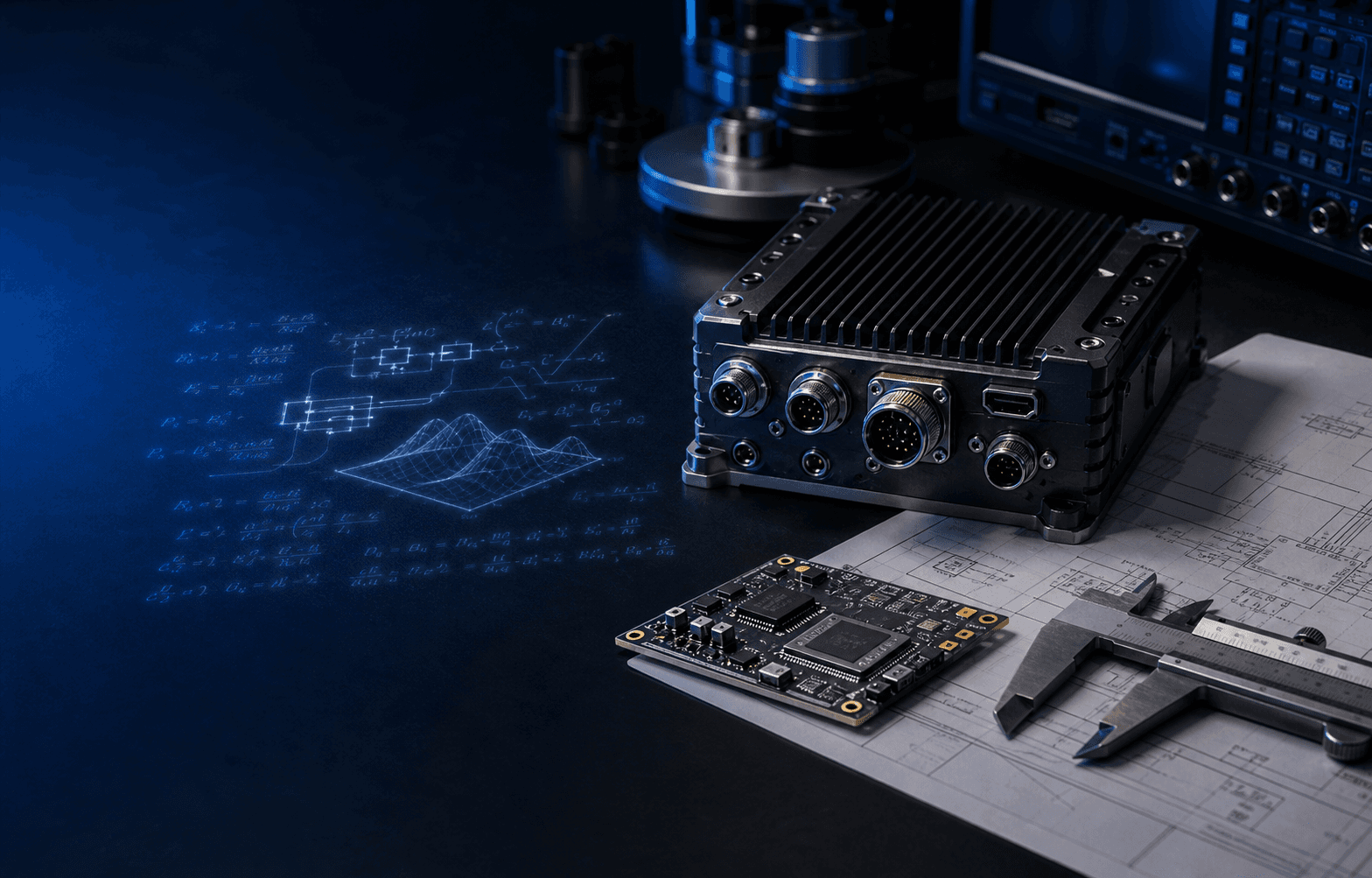
Conceptual engineering workbench with rugged computing hardware, a circuit board, measurement tools, and architecture drawings.
Conceptual visualization of research artifacts converging into an integrated system. Generated scene; it does not depict an ExistX product, customer, program, or facility.

Why four

Three questions, kept deliberately separate

Capability pages usually blur three different questions: what a firm knows, how it works, and what it delivers. ExistX keeps them separate, so a label is never mistaken for a process, and neither is mistaken for evidence.

What ExistX knows

Four disciplines

The four bodies of engineering knowledge below. Each has one page that defines its scope and its boundaries.

How ExistX works

Cross-cutting methods

Engineering approaches that connect the disciplines: described under How We Work, never as a fifth discipline.

What ExistX delivers

A combined category

High-Assurance Software-Enabled Mission Systems: described under What We Deliver, as a system outcome.

The disciplines

The four disciplines

Scope lists define territory (what each discipline covers), not per-item performance claims.

Discipline 01

Cryptographic Engineering

Connects algorithm and key-management decisions to implementation, assurance, agility, embedded constraints, and lifecycle transition.

Scope may include

  • Cryptographic algorithms
  • Key management
  • Cryptographic implementation
  • Cryptographic assurance
  • Crypto-agility
  • Post-quantum transition

Discipline 02

Cybersecurity Engineering

Integrates threat, architecture, software, components, evidence, and lifecycle decisions within a defined system boundary.

Scope may include

  • Secure system design
  • Cyber resilience
  • Vulnerability analysis
  • Security architecture
  • Authorization support
  • Continuous assurance

Discipline 03

Software Engineering & Modernization

Mission-software and lifecycle engineering: architecture, modernization, DevSecOps, automated testing, assurance, migration, and incremental delivery.

Scope may include

  • Legacy software modernization
  • Software architecture
  • DevSecOps
  • Automated testing
  • Software assurance
  • Application migration

Discipline 04

Systems Engineering & Integration

Connects mission needs to architecture, embedded systems, interfaces, digital models, hardware-software integration, test, and lifecycle decisions.

Scope may include

  • Embedded systems
  • Digital engineering
  • Model-based systems engineering
  • Mission engineering
  • Hardware-software integration
  • Interface engineering

Relationship model

How the disciplines combine

Where disciplines combine, named relationships appear. The map is an orientation device: a named intersection is not automatically a current offering, and no overlap gets its own page without distinct intent and evidence.

ExistX capability relationship map. Cryptographic, cybersecurity, software, and systems engineering combine through named relationships to produce high-assurance software-enabled mission systems, supported by an AI enabling layer.

Integrated capability model

Four disciplines working as one system.

Cryptographic, cybersecurity, software, and systems engineering are connected throughout the mission lifecycle. Their intersections form the specialized relationships shown in the map.

The combined outcome: High-Assurance Software-Enabled Mission Systems

Evidence

Every claim ends at evidence

Each discipline page states its claims boundaries and links to Work, where evidence carries an explicit state: deployed, demonstrated, in active development, planned, or conceptual.

Next step

Explore a capability

Start with the discipline closest to your technical need. Each page defines scope, methods, relationships, claims boundaries, and the evidence path.

Do not include classified, controlled, proprietary, export-controlled, or customer-sensitive information in any message sent through this site.